
In the world of fine arts and luxury craftsmanship, materials are not merely tools serving the creative process, but the very soul supporting all aesthetic values. Whether an artwork can touch the emotional depths of the viewer and endure through the years is largely decided by its originating material. When it comes to miniature sculpting and personalized works, the choice of sculpting material acts as the key that defines the boundary between a commonplace craft and a true masterpiece of art.
Today, the abundance of various materials on the market often leaves art enthusiasts questioning the true value of each work. This article will analyze in depth the fundamental differences between premium art clay and industrial clay, helping readers understand why superb material is the essential prerequisite for creating personalized miniature portrait sculptures of heritage value at SnowArt.
1. Concept and Essence: The True Definition of Premium Sculpting Materials
To appreciate the value of a unique artwork, we must first clarify the nature of different modeling materials from a professional standpoint.
Premium Art Clay – The Material for Timeless Masterpieces
Premium art clay (typically specialized mediums such as professional polymer clay, superior Japanese stone clay, or exceptional natural polymer composites) is a material researched and developed specifically for professional sculptors and high-end artisans.
Unlike common mediums, this line of clay features highly resilient molecular bonds, absolute smoothness, and optimal thermal and compressive resistance. Once subjected to specialized heat treatment (firing at standard temperatures) or cured via proprietary technology, the material petrifies, achieving outstanding hardness without shrinkage or cracking, and stands completely resilient against ambient humidity and temperature changes. This is the ideal sculpting material allowing artisans to freely render microscopic details on personalized miniature portrait sculptures.
Industrial Clay – The Limitations of Mass-Market Materials
In absolute contrast to the refined clays mentioned above, industrial clay or common lightweight clay is a mass-produced material formulated with cheap chemical methods, primarily utilized for early childhood education, toys, or generic crafts with short lifespans.
The composition of this clay often contains heavy industrial fillers, chemical lightweight powders, and highly volatile solvents. Thus, while initially feeling pliable and easy to shape for beginners, it suffers from fatal flaws:
- Severe Shrinkage: As the solvents evaporate, the sculpture shrinks by 10% to 20%, distorting the original volume.
- Deformation and Cracking: The surface becomes highly brittle upon drying, easily breaking off delicate details at the slightest impact and developing unappealing hairline cracks.
- Rapid Degradation: Under the humid tropical climate of Vietnam, industrial clay is prone to mold, discoloration, and structural disintegration after only a few years of display.
Due to these physical limitations, industrial clay is entirely excluded from the crafting process of luxury art, where each work demands permanence and maximum refinement.
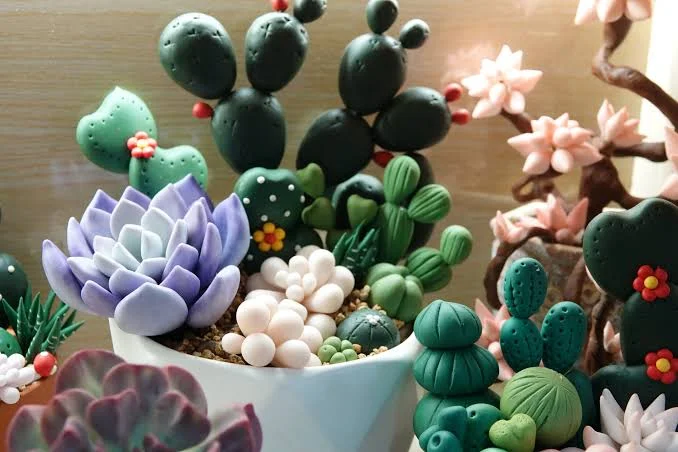
2. The Differences Between Art Clay and Industrial Clay in Sculpture Crafting
To provide a comprehensive and intuitive perspective, we evaluate these two mediums side-by-side based on the rigorous criteria of contemporary sculpture.
| Comparison Criteria | Premium Art Clay | Industrial Clay / Mass-Market Lightweight Clay |
| Surface Smoothness | Absolutely smooth, leaves no residue lines, can be polished to a porcelain-like finish. | Contains fibers, rough or overly sticky, easily captures fingerprints and dust. |
| Detail Precision | Enables sculpting of micro details (hair strands, eye-corner wrinkles, small jewelry). | Details easily blur, sag, or lose shape during the natural drying process. |
| Shrinkage and Distortion | Nearly 0% after thermal curing, perfectly retaining the original proportions. | Shrinks 10% – 20%, causing distortion and severe surface cracking. |
| Physical Durability | Excellent impact resistance, non-brittle, waterproof, endures for decades. | Highly brittle, shatters easily on impact, absorbs moisture leading to mold. |
| Color Compatibility | Absorbs specialized colors perfectly, retaining true, non-fading hues. | Colors easily bleed or dull over time due to chemical reactions from clay fillers. |
| Artistic Value | Belongs to premium art category, holding long-term collectible value. | Belongs to generic souvenir or common craft category. |
1. Superb Smoothness and the Ability to Render Microscopic Details
One of the greatest challenges of miniature portrait sculpture is recreating human characteristics within an extremely small space—sometimes only a few centimeters. To achieve this, the sculpting material must possess absolute micro-smoothness.
Premium art clay features a microscopic particle density, resulting in a uniform and compact texture. When an artisan works the clay with specialized tools, the material responds perfectly: no scraping, no voids, and no sagging. Consequently, every delicate wrinkle conveying life experience, every flowing strand of hair, and the soulful expression of the eyes are rendered in sharp detail.
In contrast, industrial clay, with its loose structure and tiny air pockets, tears easily when an artisan tries to carve fine details. Attempting to craft an exquisite miniature portrait sculpture using industrial materials is impractical, as the form continuously shifts and blurs during its natural air-drying process.
2. Durability Challenging Time – Thoroughly Overcoming Cracking and Distortion
For the elite, a piece of decor or a high-end personalized gift is valuable not only today, but as a keepsake preserving memories, accompanying the owner through decades. Therefore, the durability of the artwork is a non-negotiable criterion.
Thanks to a strict thermal process at standardized temperatures (or specialized curing technology), the polymer bonds in specialized art clay undergo a robust chemical reaction, transitioning from a pliable state to a resilient, stone-hard or high-grade solid composite. Once completed, the artwork remains entirely impervious to weather shifts, humidity, mold, and common physical impacts.
Meanwhile, industrial clay air-dries purely through water evaporation. Over time, continuous moisture loss under sunlight or air conditioning leaves the clay’s internal structure completely hollow, leading to brittleness. An artwork made from inexpensive clay can crack on its own or shatter at the slightest touch, turning a meaningful gift into regrettable fragments.
3. Excellent Color Retention and Unique Surface Finishing
Coloring miniature portrait sculptures demands a harmonious chemical compatibility between the clay canvas and specialized color pigments.
- Art clay features superb color-locking abilities. Whether applying multi-layer acrylics, classic oils, or premium solvent-based paints, specialized clay absorbs and bonds beautifully, preventing peeling or discoloration from internal chemical reactions. Once protected by a topcoat, the sculpture’s surface maintains the depth, translucency, and natural skin tones reminiscent of a master’s oil painting.
- With industrial clay, due to heavy impurities and cheap chemical preservatives, the surface often exudes oils or mild acids after air exposure over time. This reaction directly degrades the outer paint layer, causing yellowing, fading, and peeling, quickly stripping the artwork of its initial sophistication.
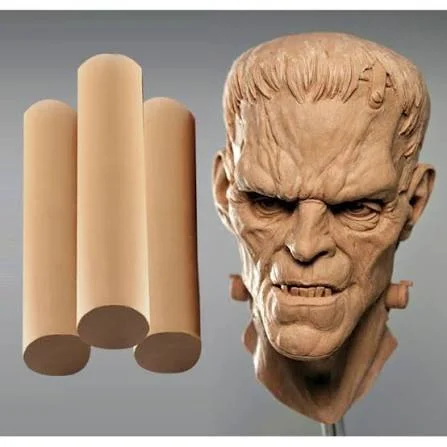
3. Why Sculpting Material Defines the Soul of a Personalized Miniature Portrait Sculpture
Every personalized miniature portrait sculpture is created not merely to represent a physical form, but to preserve a presence, a life narrative, or a glorious milestone of a distinguished individual. When an artisan pours their heart into every carved line, the sculpting material is the singular medium that faithfully conveys that spirit.
The Crucial Role of Materials in Capturing Human Charisma
Human facial anatomy is an incredibly complex and sensitive system. A mere 0.1-millimeter deviation at the corner of the lip or eye can completely alter the subject’s expression—turning a proud, radiant smile into a tired, listless expression.
Therefore, using a sculpting material with absolute stability like premium art clay is imperative. It allows sculptors to achieve complete mastery over every stroke, delivering remarkable likeness to the original subject. Every sharp facial feature, elegant suit fold, or detailed accessory remains perfectly intact from the artisan’s workbench to the desk of the client.
When Art Clay Meets the Gifted Hands of SnowArt Artisans
At SnowArt, we do not compromise on quality. All art clay used in our crafting process is carefully selected and imported directly from prestigious manufacturers in Japan and the US—regions with the world’s most stringent standards for safe, durable fine art mediums.
Combined with the gifted hands of premier sculptors versed in anatomy and physiognomy, every miniature portrait at SnowArt is a unique handcrafted masterpiece. We transform inanimate blocks of clay into soulful, living expressions that carry the breath of contemporary art and embody the premium lifestyle of their owners.
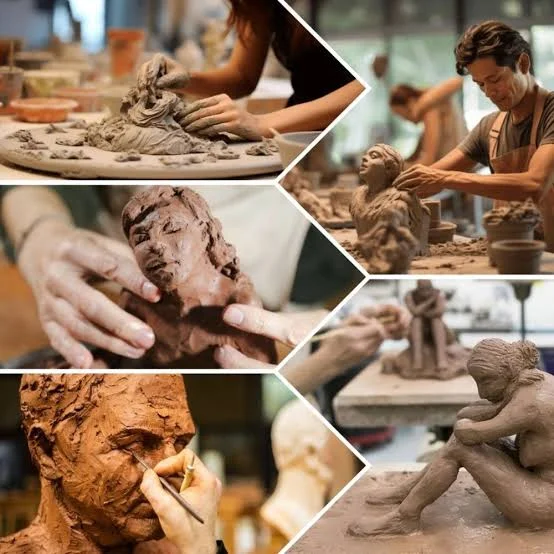
4. The Journey of Creating a Unique Handcrafted Masterpiece from Premium Art Clay
To provide a clearer view of the value embedded in a work crafted from superb art clay, let us explore the meticulous creative journey inside the SnowArt studio:
Step 1: Proportion Study and Metal Armature Construction
Every enduring miniature masterpiece requires a solid foundation. The artisan carefully studies the client’s portraits from multiple angles, then shapes a metal armature using high-heat-resistant wire to define the posture, ensuring structural harmony.
Step 2: Volume Blockout and Micro-Detail Sculpting
Layers of premium art clay are gradually built over the armature. This phase demands intense focus and gifted hands. The artisan utilizes micro-sculpting tools to define facial structure, eyes, nose, lips, and every fold of the clothing. The clay’s superior pliability enables continuous adjustments until achieving the finest likeness and presence.
Step 3: Thermal Treatment for Optimal Hardness
Upon completing the raw sculpture, the work is placed in a specialized kiln with temperature controlled to the single degree. Under heat, the polymer structure undergoes full petrification, eliminating any risk of natural cracking or shrinkage distortion.
Step 4: Hand-Painting and Specialized Protective Coating
Employing a sophisticated multi-layering paint technique, the artist adorns the sculpture with lifelike hues. Every play of light and shadow, natural skin blush, and fine pattern on the clothing is meticulously detailed. Finally, a museum-grade matte or satin protective topcoat is applied to lock in the pigments, shielding the artwork from UV rays and time.
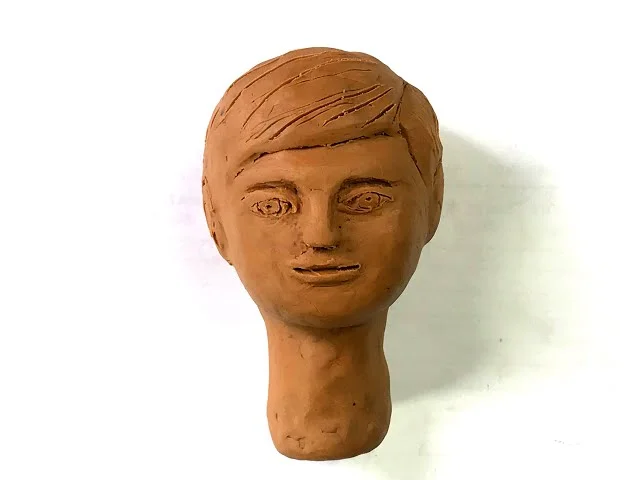
5. Investing in Miniature Portrait Sculptures: Art Value Transcending Material Wealth
In an era of industrial mass-production, personalized handcrafted values are increasingly rare and sought after by connoisseurs. A miniature portrait sculpture crafted from premium sculpting materials at SnowArt is far from a standard purchase; it is an investment in enduring spiritual value.
A Unique Gift Marking Glorious Milestones
Few gifts are as meaningful and distinguished as a portrait sculpture portraying the recipient at their moment of greatest accomplishment. Be it honoring a beloved Chairperson, appreciating a strategic business partner, or celebrating a golden family milestone, the presence of premium materials and superb craftsmanship silently speaks of status and refined aesthetic taste for both giver and recipient.
An Elegant Decor Accent for Elite Spaces
Showcased on a luxury mahogany desk, within a glass display cabinet in the drawing room, or in the quietude of a private library, a SnowArt miniature portrait sculpture immediately acts as a focal point. It not only illuminates the space but tells a story of unique identity, pride, and the owner’s distinguished journey.
Conclusion & Exclusive Waitlist Registration with SnowArt
The difference between premium art clay and inexpensive industrial clay is more than dry physical specs or intricate curing methods. It is the vast distance between a generic, fragile keepsake and an enduring miniature portrait masterpiece—one that preserves the soul, charisma, and glorious milestones of your life.
Each bespoke miniature portrait sculpture at SnowArt is not merely a decorative piece, but a unique narrative marking your proudest milestones. Currently, our artisans are finalizing the clay prototypes to achieve optimal precision before the official launch.
To be among the first owners to enjoy exclusive privileges and receive direct bespoke consultations from our expert team upon launch, you are invited to register on our waitlist today.
Last Updated on 29/07/2026 by SnowArt